Trump proposes 100% tariff on foreign films, sparking Hollywood uncertainty
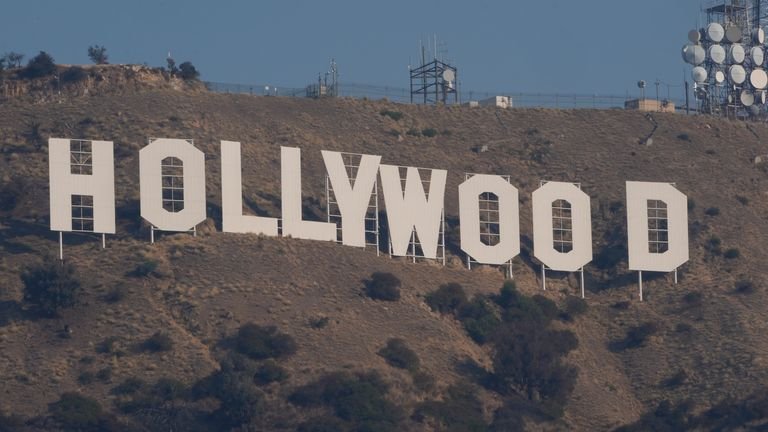
Former U.S. President Donald Trump has announced a sweeping new tariff plan aimed at reviving domestic film production. In a post on Truth Social, Trump declared that he is instructing the Department of Commerce and the U.S. Trade Representative to impose a 100% tariff on all films produced outside the United States, citing concerns over the declining state of the American film industry.
Trump described the trend of filmmakers and studios moving production overseas as a “national security threat”, arguing that incentives offered by foreign countries have led to a rapid decline in U.S.-based production. He concluded his post with the emphatic statement: “We want movies made in America, again!”
Uncertainty Surrounds the Tariff’s Implementation
While Trump’s announcement has sparked widespread debate, details remain unclear regarding how the tariff would be enforced. The post did not specify whether the policy would extend to television productions or post-production services, nor did it clarify how American films partially filmed overseas would be affected.
Hollywood studios and streaming platforms have increasingly relied on international locations to cut costs, taking advantage of government incentives, lower expenses, and skilled global crews. Films like Avengers: Doomsday, Mission: Impossible – The Final Reckoning, and Fantastic Four: First Steps have benefited from filming abroad—raising concerns about whether they would be retroactively impacted by the tariffs.
Industry Reacts With Caution
The announcement has alarmed both Hollywood and the independent film sector, which is preparing for Cannes—one of the biggest global markets for rights sales and co-productions. Sources suggest the policy could disrupt U.S. buyers seeking international films for distribution, particularly at major festivals.
China, already in a tense trade war with the U.S., has recently moved to limit Hollywood imports. This raises further questions about whether reciprocal tariffs could affect American sales agents and their ability to export films abroad.
Efforts to Retain U.S. Productions
Runaway production—filmmaking that moves overseas for financial reasons—has been a growing issue, particularly following Hollywood’s 2023 labor strikes. California Governor Gavin Newsom has been pushing to expand the state’s Film & Television Tax Credit Program from $330 million to $750 million annually, while legislation is underway to increase rebates for domestic production.
Efforts to introduce a federal tax incentive have also gained traction, though they may clash with Trump’s broader economic stance. Ironically, Adam Schiff, the California senator leading the charge for a federal production program, has historically been at odds with Trump due to his role in the former president’s first impeachment.
Hollywood’s Trump Ambassadors
Trump has previously touted his Hollywood allies, including Mel Gibson, Sylvester Stallone, and Jon Voight, as special industry representatives. While Voight is said to be working on a plan to support Trump’s vision, details remain unknown.
Gibson has publicly criticized high production costs in the U.S., stating in an interview with Fox News that he could fly an entire crew to Europe and cover accommodations for three days for less than the cost of one day of filming in Los Angeles.
FilmLA recently reported that feature film production dropped by nearly 29% in the first quarter of 2024—marking the second-worst year for Hollywood production after the pandemic-affected 2020. If Trump’s tariff plan is enforced, it could drastically reshape the film industry and further deepen economic divisions between Hollywood, global markets, and Washington policymakers.