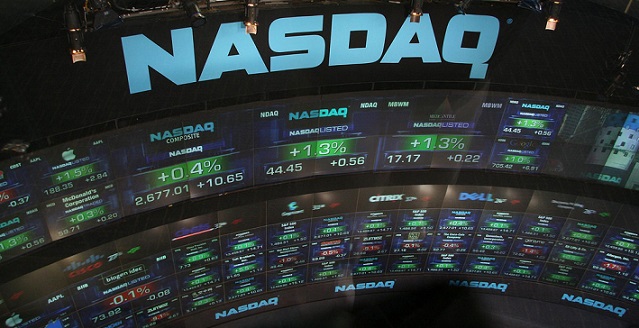
SK Hynix raises $26.5 billion in blockbuster Nasdaq debut
South Korea’s SK Hynix has pulled off one of the biggest share sales of the year, pricing its American Depositary Receipts at $149 apiece and raising roughly $26.5 billion in the process. The listing underscores just how hungry investors are for a piece of the company that sits at the heart of the world’s AI chip supply chain.
A Premium Price and Sky-High Demand
The offering priced at a 2.7% premium over SK Hynix’s average share price across the prior three trading sessions, according to a filing with the Korea stock exchange. That’s a striking outcome given that chip stocks broadly have cooled off in recent weeks, as investors grow more cautious about the pace of AI spending.
The appetite for the deal was intense: demand reportedly topped seven times the number of available shares, according to a person familiar with the matter who wasn’t authorized to speak publicly. SK Hynix itself declined to comment on pricing or demand.
Korean investors reacted positively too — the stock rose 2.8% at Friday’s open in Seoul, though that lagged the broader market’s 4.5% jump.
The new U.S. shares begin trading Friday on the Nasdaq under the ticker SKHY. Based on Seoul’s July 3 closing price, the company had earlier pointed to a reference price of 242,500 won (about $160.80) per ADR, with each common share represented by 10 ADRs. SK Hynix’s primary listing remains in Seoul.
Why This Matters: Closing the Valuation Gap
The billions raised will go toward building new factories and equipment to keep pace with surging demand for AI chips. But there’s a bigger strategic play here too: a U.S. listing gives SK Hynix direct access to American capital markets, something that could help close its valuation gap with its chief American rival, Micron, according to reports.
Despite trailing SK Hynix in market share for key memory products, Micron has long benefited from proximity to the world’s deepest pool of investors. The numbers tell the story — Micron trades at a forward price-to-earnings ratio of 6.66, compared to SK Hynix’s 5.5.
Daniel Newman, CEO of tech research firm Futurum Group, summed up the competitive dynamic by noting that SK Hynix’s edge comes from its market share and closeness to Nvidia, while Micron competes on efficiency and U.S. positioning.
Meanwhile, the domestic rivalry with Samsung Electronics — still the world’s largest memory chipmaker by volume — continues unabated.
The 14-Year Bet That Paid Off
SK Hynix’s current dominance didn’t happen overnight. The company spent 14 years investing in high-bandwidth memory (HBM) technology, often facing skepticism along the way, before that bet placed it squarely at the center of the global AI boom.
Yoo Hoi-jun, an electrical engineering professor at the Korea Advanced Institute of Science and Technology, put it simply: as long as demand for GPUs and AI data centers persists, SK Hynix remains essential to the industry.
That view was echoed last month by Nvidia CEO Jensen Huang, who said SK Hynix will stay the AI chipmaker’s largest partner and that the current memory shortage is likely to last for several more years given how strong demand remains.
Rolf Bulk, head of semiconductors and infrastructure at Futurum Equities, pointed to the scale of that demand: the HBM market is projected to grow from about $65 billion this year to $120 billion next year, and to roughly $290 billion by 2030.
Volatile Stock, Extraordinary Profits
It hasn’t been a smooth ride lately. SK Hynix shares jumped 5% on Thursday alone, yet have still fallen by about a quarter over the past two weeks amid the broader semiconductor pullback. Zoom out, though, and the picture looks very different — the stock is up 680% over the past 12 months.
The scale of the AI boom has pushed both SK Hynix and Samsung into the trillion-dollar market cap club. And remarkably, even those enormous share gains haven’t kept pace with the company’s profit growth — earnings have been so strong that employees are reportedly in line for annual bonuses of around $574,500 each, a figure that’s apparently made SK Hynix employees notably attractive as marriage partners in South Korea.
Still, valuation multiples tell a more measured story: the company’s forward price-to-earnings ratio has actually fallen, from 7.9 at the end of October down to 5.5 now.
Ken Mahoney, CEO of Mahoney Asset Management, attributed SK Hynix’s strength to its production scale, maturity, and the pricing power that comes from demand far outstripping supply — a first-mover advantage that has defined the company’s position in the market.
Who’s Involved
The offering was underwritten by Bank of America, Citigroup, Goldman Sachs, and J.P. Morgan. SK Hynix has also said that Baillie Gifford Overseas, along with funds managed by Coatue Management and Situational Awareness Partners, have each expressed interest in buying up to a combined $7 billion worth of the U.S. ADRs.
Will This Lift Korean Shares Too?
Not necessarily, according to Lee Min-hee, an analyst at BNK Investment & Securities, who pushed back on expectations that the U.S. listing would give local shares a major boost. The reason: the so-called “Korea discount,” a persistent tendency for Korean companies to trade at lower valuations due to lingering concerns over corporate governance.
(Exchange rate: $1 = 1,508.10 won)