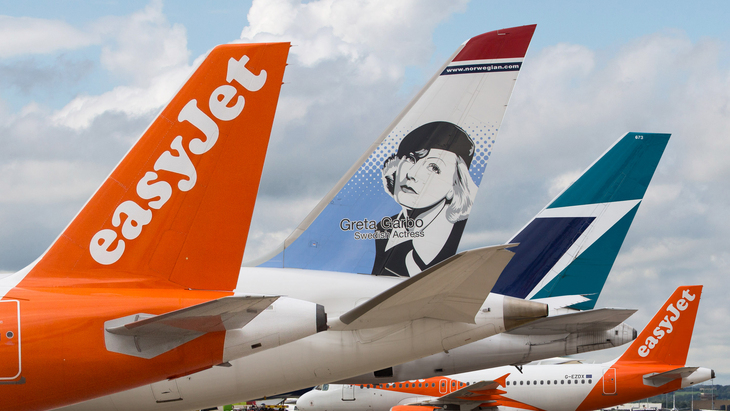
EasyJet shares surge as Apollo Global Management enters bidding war with $7.7 billion takeover offer
LONDON: EasyJet’s stock jumped sharply on Friday after the budget airline confirmed it is weighing a $7.7 billion acquisition proposal from private equity giant Apollo Global Management, thrusting the carrier into the middle of a competitive bidding contest for control of the company, according to reports.
The Offer
Under the proposed cash deal, EasyJet shareholders would receive £7.15 ($9.61) per share, putting an overall value on the airline of roughly £5.7 billion (about $7.66 billion).
Apollo has also floated an alternative to the straight cash payout: a so-called Stub Equity Alternative. This option would let shareholders roll their current EasyJet holdings into the investment vehicle Apollo would use to hold its stake in the airline, effectively letting them retain a slice of ownership rather than cashing out entirely. Under this structure, shareholders would keep their voting rights — though the exact terms of this alternative are still being worked out between the two sides.
Market Reaction
Investors reacted swiftly and positively. EasyJet shares were last trading 14% higher on the news. The stock had closed at £5.88 on Thursday after slipping 0.5% during that session, and it is now up 15.2% since the start of the year.
Apollo’s proposed price marks roughly a 22% premium over Thursday’s closing level — and an even more striking 81% premium over the £3.94 per share EasyJet was trading at on May 28, the last trading day before the offer period tied to a rival bid began.
A Second Suitor Enters the Ring
This isn’t the first takeover approach EasyJet has fielded this summer. Just days earlier, on Monday, the airline’s shares rallied after it accepted a $7.3 billion offer from another private equity firm, Castlelake. That bid values EasyJet shares at $6.90 apiece in cash, and Castlelake has until August 3 to either firm up its offer or walk away.
Apollo’s move effectively puts EasyJet at the center of a bidding war between the two private equity heavyweights, with shareholders now weighing a materially higher offer against the deal already on the table.
Industry Headwinds
The competing bids arrive at a difficult moment for the global aviation industry. Jet fuel supplies have tightened considerably in the aftermath of the U.S.-Iran war, driving up costs across the sector. The International Air Transport Association warned last month that global airline profitability is expected to be roughly cut in half this year as fuel bills climb.
EasyJet itself has felt the strain. In the first half of 2026, the airline reported a pre-tax loss of £552 million, a sharp widening from the £394 million loss it posted over the same period a year earlier. The company pointed to the fallout from the Middle East conflict as a key factor weighing on its second-half performance so far, citing higher fuel costs and reduced forward visibility on bookings and operations.
With two private equity suitors now circling, all eyes will be on whether Apollo’s richer offer prompts a formal counter, and how EasyJet’s board and shareholders ultimately respond in the weeks ahead