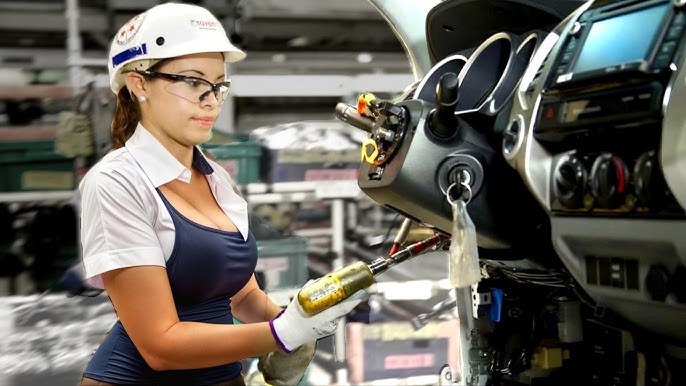
Toyota bets big on Texas: $3.6 billion investment brings Tacoma production back to U.S.
HOUSTON: Toyota is bringing the Tacoma home. The automaker announced Monday that it will pour $3.6 billion into its San Antonio, Texas manufacturing campus to relocate production of the popular midsize pickup from a plant in Tijuana, Mexico.
A Major Expansion for San Antonio
The investment isn’t just about moving an assembly line — it’s a full-scale expansion. Toyota says the project will:
· Create roughly 2,000 new U.S. jobs
· Add a second vehicle assembly line at the San Antonio plant
· Nearly double the size of the 2.7-million-square-foot facility by 2030
· Boost annual production capacity from about 200,000 units to 350,000 units
The buildout is expected to unfold over the next four years as Tacoma production shifts from Mexico to Texas.
Part of a Bigger U.S. Push
This announcement builds on Toyota’s broader commitment to invest up to $10 billion more than originally planned in the United States through 2030. The timing is notable: it comes just days after the Trump administration confirmed it would let its trilateral trade agreement with Canada and Mexico lapse, opting instead for annual reviews rather than renewing the pact outright.
Despite the shift, Toyota is emphasizing that its Mexican operations aren’t going away. A company spokeswoman said Toyota is “maintaining its operations in Mexico,” noting that Tacoma production will continue at a separate plant in Guanajuato even as the Tijuana facility’s output moves north.
“This investment expands Toyota’s manufacturing capacity and complements our broader North American production network,” the spokeswoman said.
A Reversal Six Years in the Making
There’s some irony in the timing. It was just over six years ago that Toyota confirmed the opposite move — shifting Tacoma production from Texas down to the Guanajuato plant in Mexico. Now the pickup is heading back to where it started.
San Antonio’s plant currently builds the Toyota Tundra full-size pickup (including a hybrid version) and the Sequoia hybrid SUV. The campus is also gearing up for a separate $531 million rear-axle plant expected to begin production this fall. Word of a possible San Antonio expansion — reportedly nicknamed “Project Orca” — first surfaced in industry reports back in May.
Toyota Motor North America CEO Ted Ogawa framed the investment as a vote of confidence in American manufacturing. “By expanding our San Antonio plant, we are deepening our commitment to American manufacturing, creating meaningful and sustainable jobs,” he said, adding that the move supports Toyota’s mission to meet customers’ changing needs.
Toyota, which employs 48,000 people across the U.S., says it has now invested $8.3 billion in the San Antonio campus since breaking ground there in 2003.
Racing GM for the Top Spot
Beyond jobs and factory space, this investment could carry strategic weight in Toyota’s ongoing battle with General Motors for the title of best-selling automaker in the U.S. Cox Automotive projects Toyota will narrow the sales gap with GM this year, driven by rising demand for hybrids even as pure electric vehicle sales cool off.
The numbers already tell part of the story. Through the first half of the year, Toyota’s U.S. sales rose 0.5% year-over-year to 1.24 million vehicles, while GM’s sales fell 6.8% to 1.34 million over the same period.
The diverging strategies are stark. Toyota has spent decades building out its hybrid lineup while also introducing new all-electric models — a hedge that appears to be paying off. GM, by contrast, went all-in on EVs, often describing hybrids as merely a “transitional technology.” Today, GM’s only hybrid offering is a version of the Corvette, even as it rolls out a full electric lineup for Cadillac and other brands.
With Tacoma production coming home and capacity expanding, Toyota appears to be positioning itself for continued momentum — both in the marketplace and in Washington’s shifting trade landscape.