Sanctions possible if China stole US AI tech
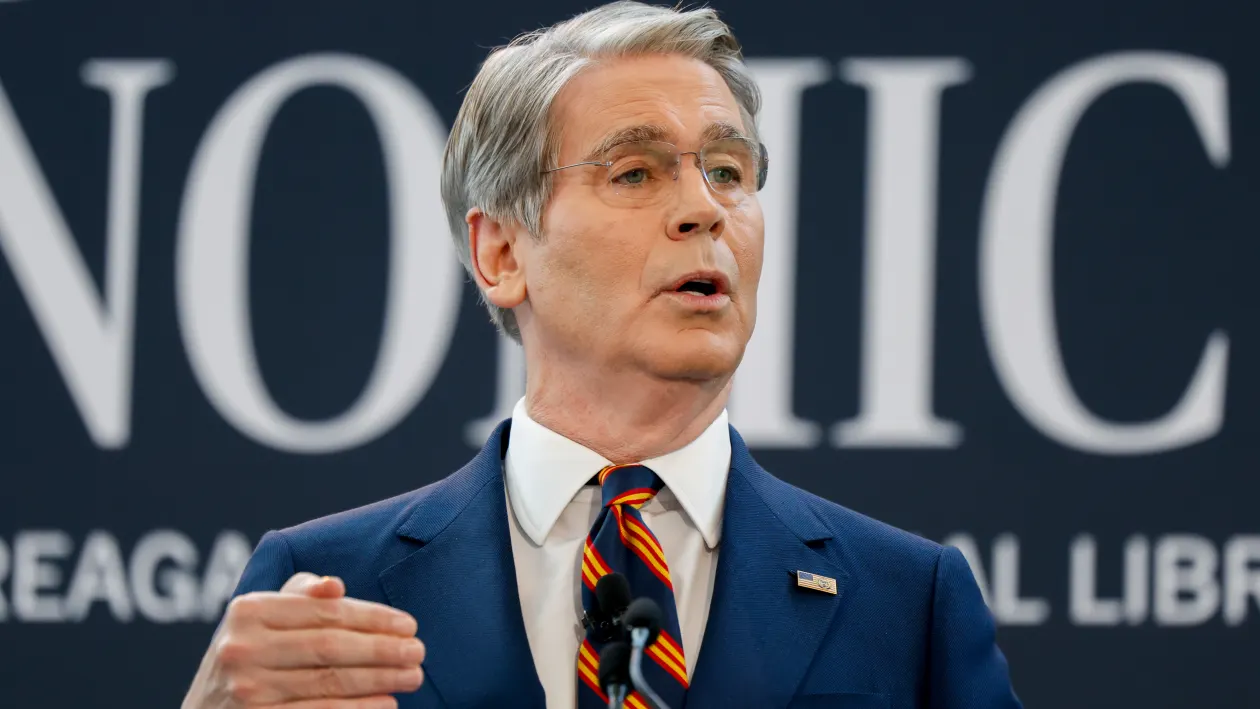
WASHINGTON: Treasury Secretary Scott Bessent said Tuesday the Trump administration will investigate whether Chinese artificial intelligence models were built using technology stolen from American companies, warning that sanctions could follow if evidence of intellectual property theft is found.
The comments come as Chinese open-weight models gain ground against leading U.S. offerings from OpenAI and Anthropic, raising concerns among tech executives and government officials about America’s lead in the global AI race. Chinese startup Moonshot AI this month released Kimi K3, a model that outperforms U.S. competitors across several industry benchmarks.
“There’s a very technical AI word for it called distillation, but you and I would call it theft,” Bessent said during an interview on Fox Business‘ “Mornings with Maria.” “This administration supports open source models, but what we do not support is IP theft. If we see, especially that overseas models are stealing from our great companies, we have the ability to sanction them because of this theft”.
Distillation is an AI training method in which a smaller, less capable model is built using outputs from an existing, stronger model.
Anthropic sent a letter to the Senate Committee on Banking, Housing and Urban Affairs last month alleging that Chinese tech company Alibaba had carried out “the largest known distillation attack” against it to date. The company said operators affiliated with Alibaba conducted 28.8 million exchanges with its Claude models using about 25,000 fraudulent accounts between April 22 and June 5.
“We are finding watermarks of our U.S. large language models on many of the Chinese models, and that’s unacceptable,” Bessent said Tuesday. “We’re going to be looking at that in the coming days or weeks”.
The U.S. and China are planning to hold AI talks in September, according to a Reuters report. Bessent will represent the U.S. during the discussions.
Both Anthropic and OpenAI have faced their own accusations of theft in recent years. Anthropic agreed to pay $1.5 billion in September to settle a class action lawsuit with a group of authors who alleged the company illegally downloaded books from pirated databases. The New York Times sued OpenAI and Microsoft in 2023, alleging copyright infringement in the training of their models.