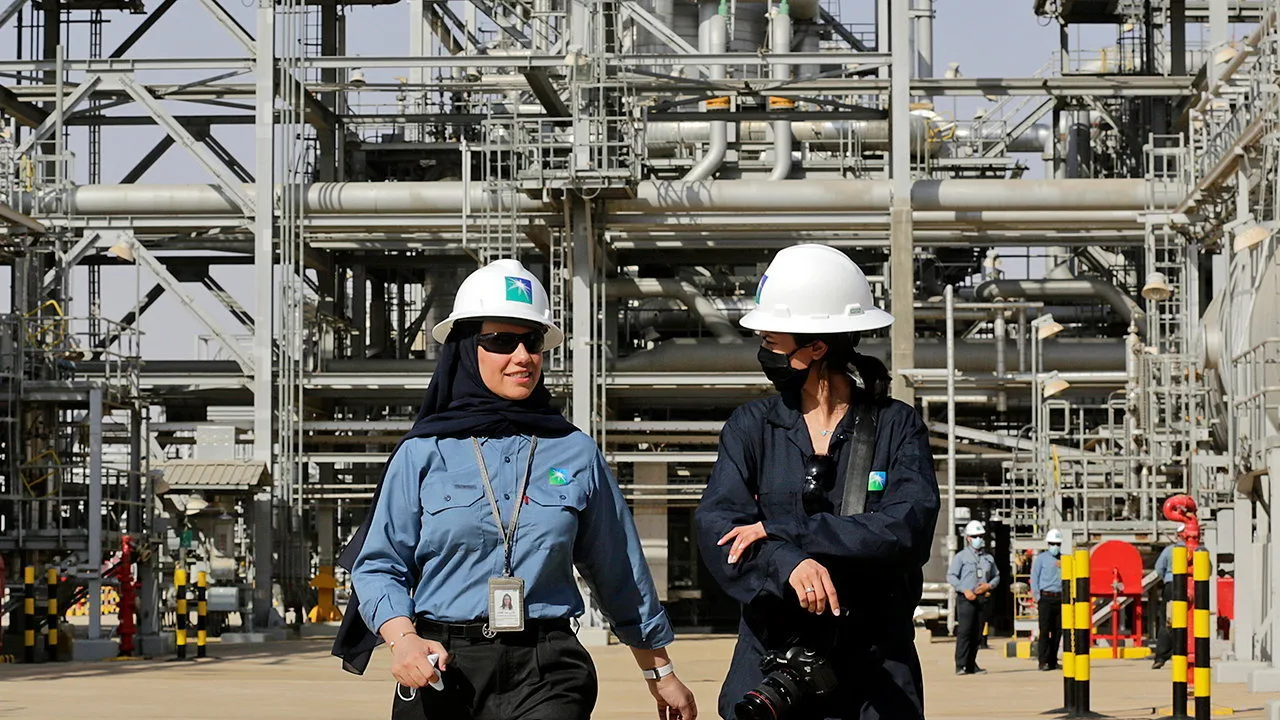
Saudi Aramco profit jumps 44% in second quarter as it navigates Hormuz disruption
DHAHRAN: Saudi Aramco said Tuesday that its net income climbed 44% in the second quarter, as oil prices spiked amid an unprecedented disruption to shipping through the Strait of Hormuz, even as the state-controlled energy giant reported that facilities in the Kingdom had come under attack.
The world’s largest oil producer posted second-quarter net income of $32.7 billion, up from $22.7 billion a year earlier and slightly ahead of the $32.5 billion it earned in the first quarter of 2026. Adjusted net income, which strips out one-time items, rose 33% year-over-year to $33.4 billion.
For the first six months of 2026, Aramco reported net income of $65.2 billion, up from $48.7 billion in the same period last year, on revenue of $263.7 billion.
The results reflect a volatile six months for global energy markets. Aramco’s average realized crude price jumped to $108.10 a barrel in the second quarter, up from $76.90 in the first quarter and $66.70 a year earlier, as regional tensions curtailed supply. Aramco said the increase in revenue was driven mainly by higher prices for crude oil and refined and chemical products, even as the volumes it sold declined.
Hormuz disruption and attacks on facilities
In the report, Aramco described “unprecedented regional disruption” during the quarter and said it relied on its East-West Pipeline, storage capacity and export terminals to keep oil flowing to global markets despite the supply shock through the Strait of Hormuz, a critical corridor for global crude shipments.
The company also disclosed that certain facilities belonging to Aramco and its affiliates in Saudi Arabia were targeted in attacks during the quarter and again in July. Aramco said that as of June 30, the impact on those facilities was not material to its financial position, results of operations or cash flows, and that it would continue to monitor for further impact.
President and CEO Amin H. Nasser said the company’s diversified asset base and long-term infrastructure planning allowed it to maintain business continuity through the disruption. “With geopolitical uncertainty and declining global inventories, the importance of both energy security and energy addition has never been clearer,” Nasser said in the earnings statement.
Chief Financial Officer Ziad T. Al-Murshed said the quarter demonstrated the company’s ability to generate consistent shareholder returns despite regional pressures, pointing to the 33% year-over-year increase in adjusted net income.
Cash flow, dividend and gearing
Despite the profit growth, free cash flow fell to $12.3 billion in the second quarter, down from $18.6 billion in the first quarter, which Aramco attributed to a $13.6 billion working-capital build alongside higher capital spending. For the first half, free cash flow totaled $30.9 billion, down from $34.4 billion a year earlier.
Aramco’s board declared a base dividend of $21.9 billion for the second quarter, to be paid in the third quarter, keeping the company’s total base dividends for the first half at $43.8 billion.
The company’s gearing ratio — a measure of debt relative to its capital base — rose to 6.2% at the end of June, up from 4.8% at the end of the first quarter, which Aramco linked to dividend payments, capital spending and the reclassification of certain liabilities tied to a pending asset sale.
Return on average capital employed, a metric the company uses to gauge how efficiently it deploys capital, rose to 22.1% on a trailing 12-month basis, up from 20.9% in the prior quarter and 20.3% a year earlier.
Upstream and downstream performance
Aramco’s upstream segment — its oil and gas exploration and production business — posted adjusted earnings before interest and taxes of $50.9 billion in the quarter, up from $44.7 billion a year earlier, driven by higher crude prices even as sales volumes declined and production royalties rose. Total hydrocarbon production was 9.5 million barrels of oil equivalent per day in the quarter.
The company said work continued on several capacity expansion projects, including the Zuluf crude oil increment and the Fadhili Gas Plant expansion, both intended to help Aramco maintain a maximum sustainable production capacity of 12 million barrels per day. The first phase of the Jafurah Gas Plant continued steady production, while a second phase remains under construction and is expected to be completed in 2027.
The downstream segment — refining, chemicals and marketing — reported adjusted EBIT of $6.2 billion, more than double the $3.2 billion posted a year earlier, which Aramco attributed to stronger refining margins. Supply reliability stood at 98.4% for the quarter, which Aramco said it maintained despite regional uncertainty by relying on alternative export routes and storage infrastructure, including repositioning its Yanbu export terminal to serve as a hub for shipments from Saudi Arabia’s western region.
Portfolio moves
Aramco continued to reshape its portfolio during the quarter. In May, the company signed an agreement to sell its full equity stake in PRefChem, a refining and petrochemical joint venture in Malaysia, to PETRONAS, Malaysia’s state energy company. The deal, still subject to customary closing conditions, is expected to close in the second half of 2026.
Separately, Aramco’s majority-owned subsidiary SABIC continued to divest parts of its petrochemicals business, including agreements to sell its European petrochemicals unit and its engineering thermoplastics business in the Americas and Europe. SABIC signed a final agreement with Mutares SE & Co. KGaA in June to complete the sale of the thermoplastics business.
During the quarter, Aramco’s lubricants and retail subsidiary also completed the acquisition of TotalEnergies’ 50% stake in Tas’helat Marketing Company, a Saudi retail and transportation firm with more than 180 service stations, making it a wholly owned Aramco subsidiary.
Share buybacks and financing
Aramco also continued a share repurchase program approved by its board in March, under which it can buy back up to 350 million shares over 18 months for as much as $3 billion. As of June 30, the company had repurchased 83.8 million shares for $610 million.
In February, Aramco completed a four-tranche international bond sale totaling $4 billion under its Global Medium-Term Note Programme, with maturities ranging from 2029 to 2056, to fund general corporate purposes.
The company’s condensed financial statements were reviewed by PricewaterhouseCoopers, which said in a report dated Aug. 3 that nothing had come to its attention indicating the results were not prepared in accordance with applicable accounting standards.