
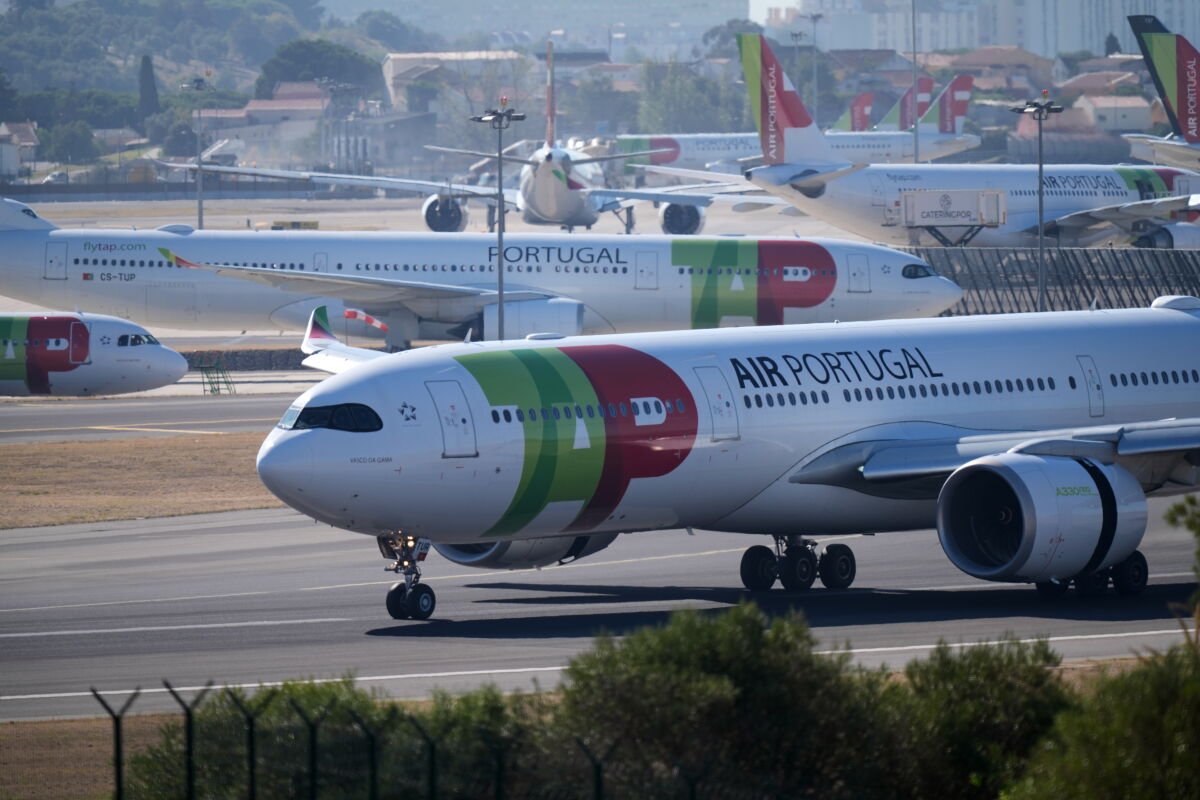
Lufthansa in talks to buy remaining stake in TAP Air Portugal, CFO says
FRANKFURT: Lufthansa is in talks to potentially acquire the remaining 50.1% majority stake in Portugal’s flag carrier TAP from the government in the future, the German airline’s finance chief said Thursday.
Portuguese Prime Minister Luis Montenegro announced Wednesday that his government had selected Lufthansa to buy a stake of up to 44.9% in TAP Air Portugal for 1.2 billion euros ($1.3 billion), beating out rival Air France-KLM.
Lufthansa CFO Till Streichert said separate negotiations are being held about the company eventually taking the remaining 50.1% stake from the government. As part of that process, the Portuguese government could become a Lufthansa shareholder with a stake of up to 5%, Streichert said.
The deal, years in the making and repeatedly delayed, marks the next step in the consolidation of Europe’s airline industry. It still requires approval by European Union regulators.
Streichert said he expects the deal to close in the first half of 2028 and to yield 450 million euros in synergies.
Lufthansa CEO Carsten Spohr told journalists the deal was “a perfect fit” for the group, which already owns Austrian Airlines, ITA Airways and SWISS among other carriers. He said it would be an easier transaction for the EU to approve than Italy’s ITA, whose turnaround is still ongoing, since there is less business overlap with Lufthansa.
The government set aside 5% of the company for its more than 9,000 employees to buy shares, with the government remaining the main shareholder. Montenegro said the government may conclude TAP’s complete privatization by 2028.
TAP says it carried 16.7 million passengers last year. Its more than 90 aircraft fly to over 90 destinations, 52 of them in Europe, 16 in Central and South America, 14 in Africa and 11 in North America. Its routes to Brazil are particularly prized, analysts say.
The airline reported a net profit of 4.1 million euros ($4.6 million) last year, according to the company’s published accounts.
Two previous attempts to sell off stakes in the airline, in 1998 and 2015, failed, with governments taking the company back into Portuguese state ownership.